Yellow leaves can look like a big problem. In many cases, you can fix it.
When you see yellow leaves on succulents, the cause is often one of these:
- Overwatering stress (roots sit in wet soil too long)
- Root rot (roots start to break down)
This guide helps you tell the difference with a quick visual check, then shows what to do next.
Quick visual diagnosis (30 seconds)
Start here before you change anything.
Signs of overwatering stress (no rot, or early)
- Yellowing starts on the bottom leaves
- Leaves feel full or slightly soft (not mushy)
- Plant looks pale or a bit see-through
- Soil stays damp days after watering
- Stem base feels firm
Signs of root rot (act today)
- Yellowing spreads fast and reaches middle or top leaves
- Leaves feel mushy and may fall off
- Stem base looks dark or feels soft at the soil line
- Soil smells sour or musty
- Plant feels loose, like it is not anchored
If you feel unsure, unpot the plant and check the roots. That gives you a clear answer.
What makes leaves turn yellow?
Succulents store water in their leaves. They still need air around their roots.
When soil stays wet, roots cannot breathe well. The plant reacts by dropping older leaves. If the roots stay wet long enough, rot can start.
Think “time spent wet,” not “amount of water once.” Many overwatered succulents got watered in soil that drains poorly.
Overwatering stress vs root rot: quick comparison
| What you notice | Overwatering stress | Root rot |
|---|---|---|
| Speed | Slow change | Fast change |
| Leaf feel | Full or soft | Mushy |
| Stem base | Firm | Soft or dark |
| Smell | Neutral | Sour |
| Soil | Damp too long | Wet and heavy |
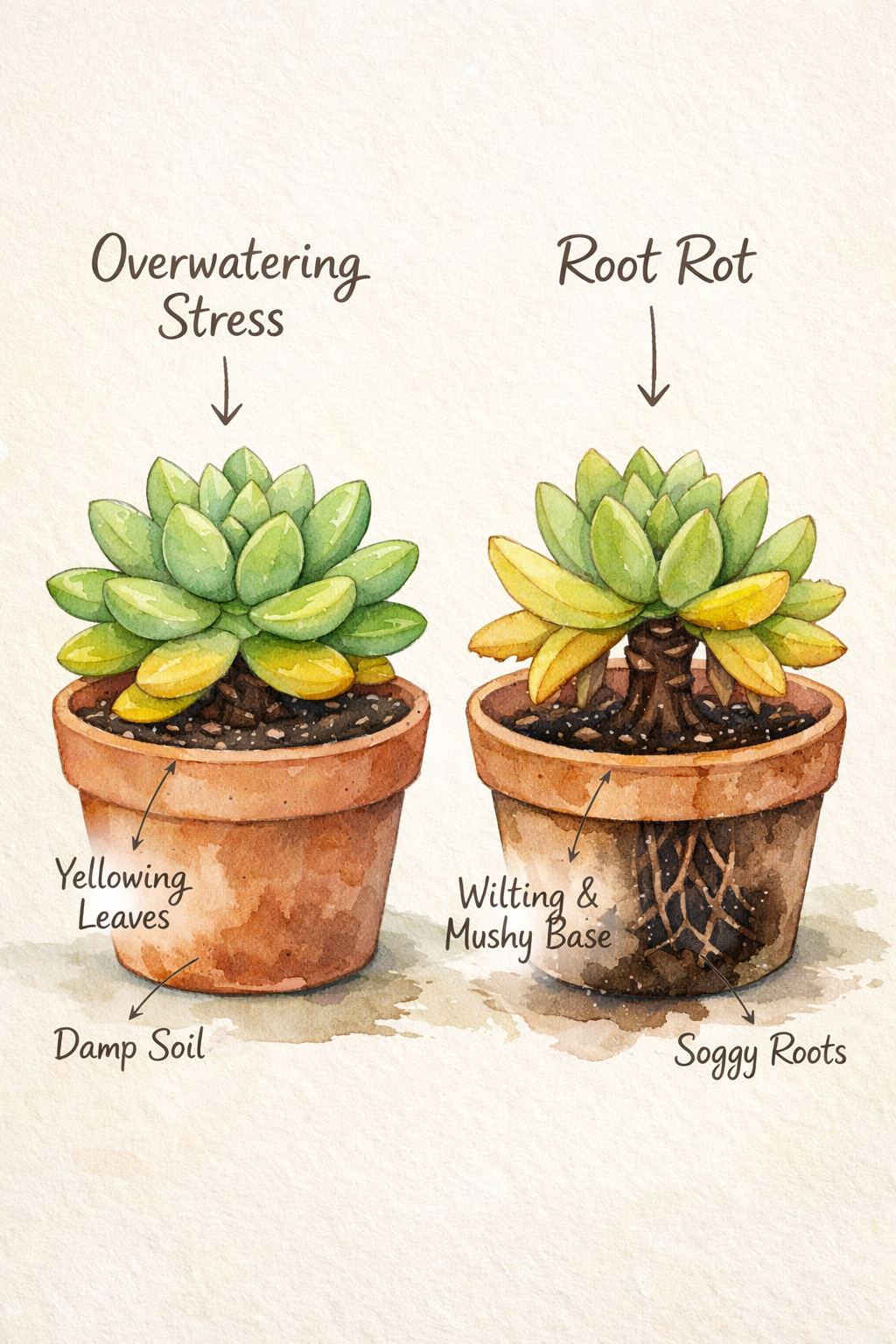
Step 1: Do the base check
This is the fastest test you can do in place.
The “press at the soil line” test
Press the stem base where it meets the soil.
- Firm base: follow the overwatering stress plan
- Soft base: treat it as rot and unpot now
Rescue plan A: overwatering stress
Goal: dry the root zone and reset your watering pattern.
1) Stop watering
Do not water again until:
- the pot feels light when you lift it
- the soil is dry a few inches down
- the leaves stop looking see-through
Indoors, this can take 7–21 days.
2) Improve light without burning the plant
Low light slows drying.
- Move the plant to brighter window light
- If it has lived in shade, move it closer over a few days
Succulent light and watering basics
3) Make sure the pot can drain
- Use a pot with a drainage hole
- Empty the saucer after watering
- If you use a decorative outer pot, do not let water sit inside it
4) Fix the soil (most “overwatering” starts here)
If your soil feels dense, it can stay wet for too long. When the plant feels stable, repot into a mix with more grit.
Look for ingredients like pumice, perlite, lava rock, or coarse sand. Avoid mixes that stay spongy.
5) Do not strip every yellow leaf
Yellow leaves will not turn green again. The plant can still use the water in them.
Remove a leaf only if:
- it is mushy
- it pulls off with no effort
- it traps moisture against the stem
6) Water the right way after the plant stabilizes
When the soil is fully dry and the base feels firm:
- water until it drains
- then let it dry all the way before the next watering
Skip small “sips.” Use soak → drain → dry.
Rescue plan B: root rot triage
If you see signs of succulent root rot, move fast. Rot spreads in soft, wet tissue.
Goal: cut out the rot, let the plant dry, then restart it in clean soil.
What you need
- Clean scissors or pruners
- Paper towels
- Fresh gritty succulent mix
- A pot with drainage
- Rubbing alcohol for tools (optional)
1) Unpot and inspect
Lift the plant out and brush off wet soil so you can see the roots.
Healthy roots feel firm. Rotting roots look dark and feel soft. They may peel or snap with no effort.
2) Cut away all soft tissue
Trim until you reach firm tissue.
- If only a few roots look bad, cut those roots
- If the stem base feels soft, cut the stem above the soft part and save the top as a cutting
Wipe your tool between cuts if the rot keeps showing up.
3) Let it callus
Set the plant or cutting on paper towels in bright room light. Avoid hot sun.
Wait 24–72 hours so the cut surface dries. This step lowers the chance of more rot.
4) Repot into dry mix
Use a clean pot and dry gritty soil. Do not water right away.
5) Wait before the first watering
- If the plant still has some roots: wait 5–10 days
- If it is a fresh cutting: wait for new roots (often 1–3 weeks), then water a small amount
6) Aftercare
- Bright, indirect light
- Warm room
- Airflow
Yellow leaves may continue for a bit while the plant grows new roots. Judge progress by firmness and new growth.
Succulent watering mistakes that cause yellow leaves
These keep soil wet for too long:
- Watering on a schedule
- Pots with no drainage hole
- Dense soil that holds water
- Low light and cool rooms
Prevention: a simple routine
Use three checks before you water:
- Pot weight: lift it; light means dry
- Soil depth: check a few inches down, not just the surface
- Plant feel: firm leaves and a firm base are good signs
If you feel unsure, wait 2–3 days and check again.
FAQ
Will yellow leaves turn green again?
No. Focus on new growth and plant firmness.
Why are only the bottom leaves yellow?
Bottom leaves can age out. It becomes a problem when yellowing speeds up and the soil stays wet.
My soil is dry but leaves are yellow. What else can cause it?
Sun change, cold stress, repot shock, and normal leaf drop can cause yellowing. If the plant feels loose or the base feels soft, check roots.
How to save yellow succulents if I am not sure which problem it is?
Do the base test. If the base feels soft, unpot and inspect roots. If the base feels firm, pause watering and focus on dry-down, light, and drainage.
How long does recovery take?
Overwatering stress can take 2–6 weeks to settle. A rot reset can take 3–8 weeks for strong rooting.
Where can I read more about watering?
Beginner guide: simple watering routine
The calm takeaway
Yellow leaves are a signal, not a verdict.
- Firm base and damp soil: stop watering and fix the dry-down
- Soft base or sour smell: unpot, cut rot, callus, and restart in dry mix
Most plants recover once you remove the “wet too long” problem.