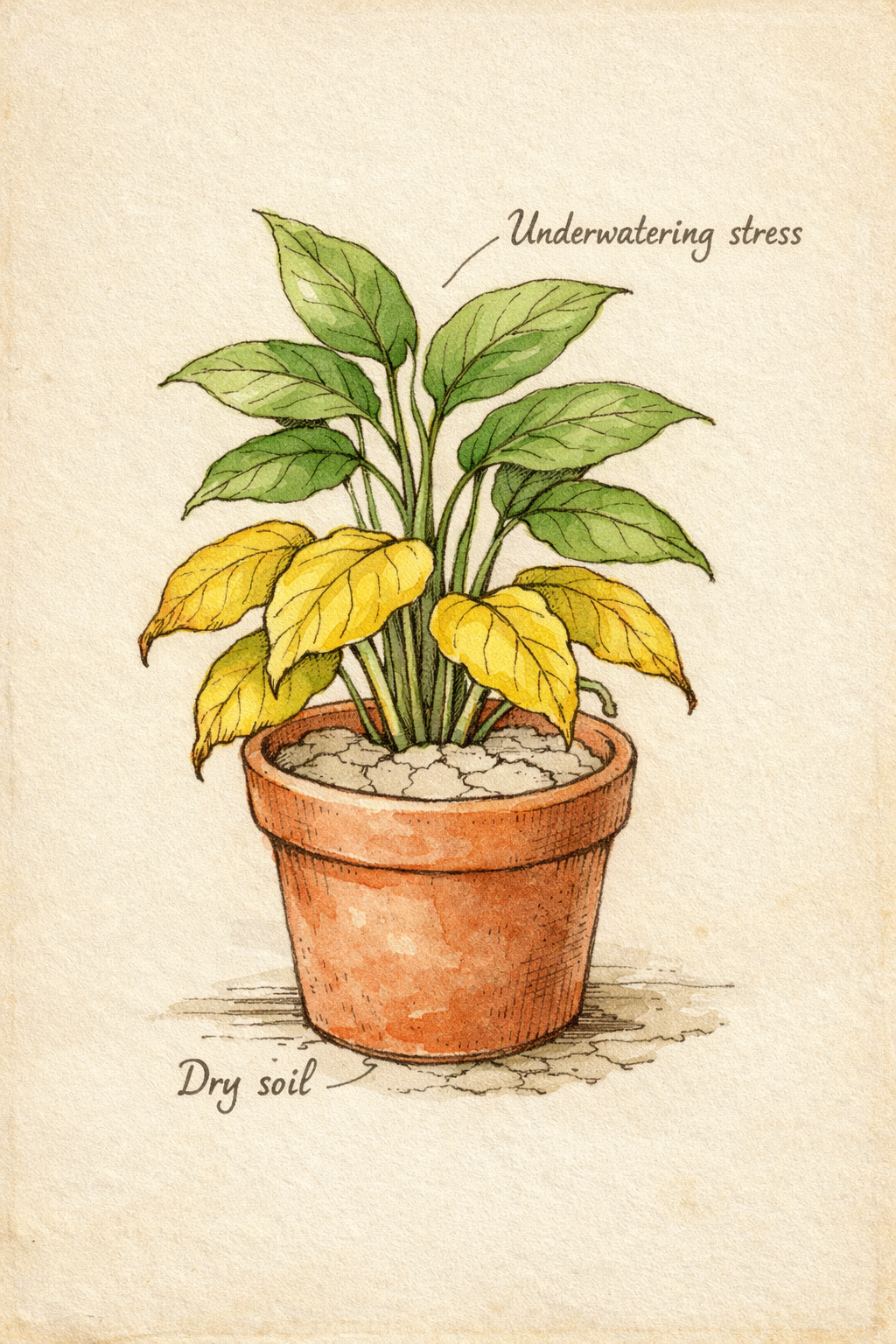
Yellow leaves do not always mean too much water. When the soil feels dry and the leaves are turning yellow, the problem is often the opposite: underwatering.
This is a very common issue, especially for beginners or during hot, dry periods. The good news is that underwatering stress is usually easy to fix once you recognize the signs.
Let’s break it down clearly.
What underwatering looks like
When a plant does not get enough water, it starts protecting itself. Instead of supporting all leaves, it sacrifices the older ones.
Common visual signs include:
- Soil is completely dry or pulling away from the pot edges
- Yellow leaves start at the bottom of the plant
- Leaves feel thin, papery, or crispy rather than soft
- Leaf tips may turn brown before the rest yellows
- The plant looks dull or slightly droopy, not mushy
If you gently lift the pot, it often feels unusually light.
Why leaves turn yellow when water is missing
Water is how plants move nutrients from roots to leaves. When water is limited, that system breaks down.
The plant redirects resources to survive, letting older leaves fade and fall. Yellowing is the early warning before permanent damage happens.
Underwatering stress is different from root rot. There is no mush, no smell, and no collapsing stem. The roots are dry, not decaying.
How to confirm underwatering
Before watering, check two things:
- Insert a finger 3-5 cm into the soil. If it is dry all the way down, the plant needs water.
- Look at the leaf texture. Dry stress feels crisp or thin, never soft or translucent.
If both signs match, you are dealing with underwatering.
How to fix it safely
Do not flood the plant suddenly.
Follow these steps:
- Water slowly and evenly until water drains from the bottom
- Let the pot fully absorb moisture before returning it to its place
- Avoid watering again until the top soil dries slightly, not fully
- Remove fully yellow, dead leaves so the plant can focus on recovery
Most plants respond within a few days. New growth will look greener and firmer.
How to prevent it next time
- Check soil, not the calendar
- Use pots with drainage holes
- In hot or bright conditions, check moisture more often
- Learn your plant’s specific water needs
Yellow leaves with dry soil are a signal, not a failure. Once you understand it, your plant care becomes much calmer and more confident.